

Women's Initiatives for Gender Justice
Women’s Initiatives for Gender Justice is an international feminist organisation working to advance gender justice through the law, with a particular focus on international criminal law and accountability for gender-based harm.
We work to ensure that international justice systems recognise the full scope of gender-based violence and discrimination, and that survivors and communities most affected by harm are able to shape justice processes, from how crimes are defined, to how accountability and reparations are pursued.
Our work sits at the intersection of international criminal law, feminist legal analysis, and collective action. We combine deep legal expertise with sustained engagement alongside survivors, civil society, and justice institutions to address gaps where gender-based harm has been overlooked, mischaracterised, or excluded.
How We Work
We track legal developments and produce research to strengthen gender justice in international criminal law.
We engage directly with international courts, policy makers and global institutions decision-makers to shape legal and policy frameworks for gender-based crimes.
We bring together survivors, legal experts, academics, and change makers to advance gender justice collectively.




what we work on
-
Sexual violence refers to acts of a sexual nature committed through coercion, force, threat, or by exploiting conditions of coercion. It includes rape, sexual slavery, forced marriage, enforced sterilisation, forced pregnancy, forced nudity, grooming and various other acts
We understand sexual violence as both an individual and systemic harm, used to dominate, control, or punish on the basis of gender, sexuality, or identity. It affects women, men, and persons of diverse sexual orientations and gender identities, often intersecting with race, ethnicity, class, age, disability, or displacement.
Under the Rome Statute, sexual violence may amount to a war crime, a crime against humanity, or an act of genocide. Yet justice has been uneven: jurisprudence remains inconsistent, and survivors’ participation and reparations remain underdeveloped.
Women’s Initiatives for Gender Justice works to close these gaps by advancing survivor-informed, intersectional, and gender-sensitive approaches to justice, recognising survivors not only as witnesses, but as rights-holders, experts, and agents of change.
-
Reproductive violence refers to acts that directly or indirectly violate reproductive autonomy, understood as the capacity that all individuals have to decide whether to reproduce, when and with whom, and to access sexual and reproductive health information and services.
Forms of reproductive violence include forced abortion and contraception, prevention of births, interference with breastfeeding, forced sterilisation and forced pregnancy, destruction of reproductive healthcare or infrastructure, lack of institutional access to reproductive health services, including abortion services. It also includes torture or cruel, inhumane and degrading treatments that target reproductive capacity.
Reproductive violence and sexual violence can overlap. For example, in cases where a victim of rape that results in pregnancy is forced to carry the pregnancy to term. However, reproductive violence does not necessarily require sexualised contact, for example, in cases of forced contraception through pills and hormonal shots. There are also cases of sexualized violence that don’t involve violations of reproductive autonomy.
-
Gender persecution means the deliberate, systematic, and severe denial of fundamental human rights to individuals or entire groups, on the basis of gender (including identity, expression, sexual orientation) or the combination of gender plus other status (race, religion, ethnicity, disability, migration status etc.).
Unlike isolated acts of violence, gender persecution is characterised by patterns of discrimination and rights-deprivation that are embedded in larger systems of power, such as conflict, occupation, authoritarian rule, or other atrocity settings.
It covers not only acts of sexual violence, but also the removal of access to education, freedom of movement, employment, assembly, health services, and political representation, where those deprivations are shaped by gender-based discrimination. For example, laws or practices that forbid women or LGBTQI+ persons from attending school, require forced labour from persons because of their gender identity, or systematically target a gendered group for extermination, fall within the concept of gender persecution.
Women’s Initiatives for Gender Justice advocates for a survivor-informed, intersectional vision, recognising that gender persecution often overlaps with other forms of discrimination (race, ethnicity, religion, disability, sexual orientation).
-
Gender apartheid refers to an institutionalised and systematic regime of discrimination, control and denial of rights based exclusively or primarily on gender (including gender identity or expression) and often compounded by other identities (such as race, ethnicity, religion, disability or sexual orientation).
Gender apartheid goes beyond individual acts of violence. It is a structured, pervasive system of domination by one gender group over another, with the aim of maintaining that dominance through legal, social, economic, and cultural mechanisms. International human rights and atrocity law currently do not explicitly recognise “gender apartheid” as a standalone crime in many instruments but growing civil society and expert commentary argue for its codification as a crime against humanity.
Women’s Initiatives for Gender Justice adopts a survivor-informed and intersectional approach, recognising how gender apartheid intersects with other axes of discrimination, and protecting not only women and girls, but also LGBTQI+ persons, persons with disabilities, Indigenous communities, and migrants who are targeted under regimes of gender-based exclusion or subjugation.
-
Intersectionality refers to how a person’s multiple identities (such as gender, race, ethnicity, disability, age, migration status, sexual orientation, and class) combine to shape both experiences of harm and access to justice. In other words, two people may experience the “same” crime differently because of how their identities overlap and how systems treat them.
In the realm of international criminal justice, applying intersectionality means recognising that survivors of atrocity crimes are not only harmed by a single axis of oppression. For example, a woman from an ethnic minority who is displaced may face sexual violence, but her harm is magnified by her ethnicity, her displacement status, and gendered norms. A person with disability may face barriers in evidence giving or witness protection that others do not.
At Women’s Initiatives for Gender Justice, we treat intersectionality not just as a concept but as a practical operational lens. We seek to ensure that investigations, prosecutions, adjudications, and reparations in the International Criminal Court (ICC) and related mechanisms are designed, implemented, and reviewed in ways that account for overlapping discrimination and layered vulnerabilities.
-
International criminal law recognises sexual violence as a serious international crime, yet its core legal instruments do not define what makes violence “sexual” or provide clear guidance on how acts of a sexual nature should be identified and assessed.
This gap has contributed to under-recognition, inconsistent charging, and the exclusion of many survivor experiences from accountability processes.
The Hague Principles on Sexual Violence respond to this gap by providing survivor-informed, practice-oriented guidance on how sexual violence should be understood, identified, and addressed in international criminal law. They clarify when an act may be considered sexual, when it amounts to sexual violence, and how context, coercion, power relations, and lived experience must inform legal analysis.
-
Emerging technologies are transforming how international crimes are investigated, how advocacy is conducted, and how harm is experienced.
From artificial intelligence (AI) and digital evidence to reproductive technologies and online violence, these developments create both opportunities and risks for gender justice.
Women’s Initiatives for Gender Justice works to ensure that technological change strengthens accountability, respects human rights, and remains grounded in survivor-informed and intersectional approaches.

our impact
Shaping gender justice.
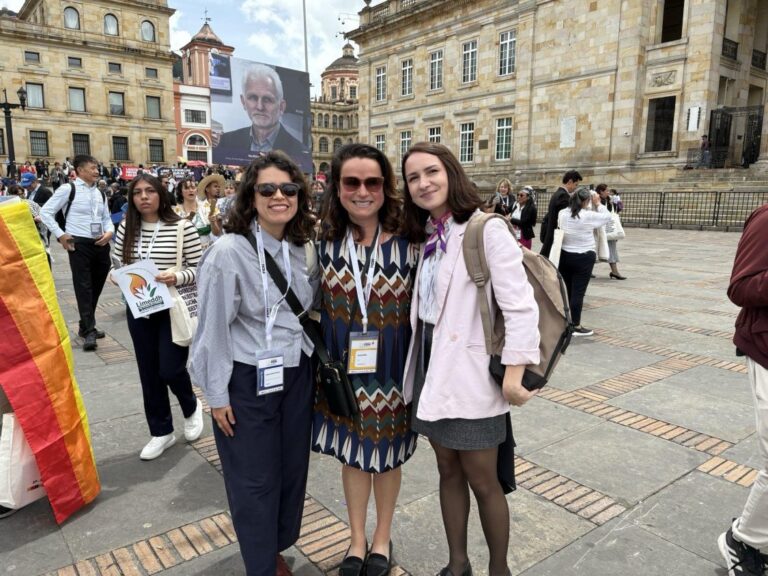
For over 20 years, Women’s Initiatives for Gender Justice has driven feminist change inside international justice systems.
Across 15 countries, including Ukraine, Afghanistan, Colombia, and Palestine, we work with partners and practitioners to ensure accountability reflects lived experience.
Through more than 60 legal submissions and publications, we have helped shape jurisprudence, policies, and principles that strengthen survivor-centred, intersectional approaches to justice.

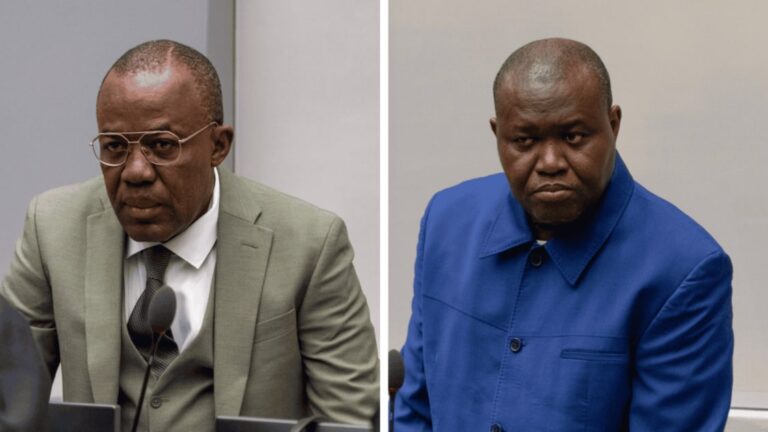
Al Hassan Reparations Hearing Reparations must Recognise Victims’ Gendered and Intersectional Harm
